Telepathy Momma

Clara

Backtracking to the early days of class, I can’t help but notice the striking comparisons between Pan’s Labyrinth and House of the Spirits (which is in no doubt why Duffey even showed it to us in the first place. Thanks teach.). We we discussed before, a child’s innocence seems to radiate off of the terrible circumstances that arise within their daily lives. For Pan’s Labyrinth, Ofelia’s innocence took the form through fairy tales and stories, mostly as a way to cope with the terrible things actually going on around her. The same could actually be said the same thing about Clara in House of the Spirits- both characters seem to expel a great multitude of innocence, which is lost by many of her other family members.

In Clara’s case, her form of innocence comes from the strange powers she develops as a small child. Clara’s telekinetic prowess, in my opinion, represent the same thing that Ofelia has in her story- a sense of innocence. As many of her beloved family members pass on, she in some way stays true to her innocence because she has that power to see things before they happen. This is pretty apparent in the way she treats people around her. Her dialogue with Esteban seems to stimulate a sense of purity as she really doesn’t say anything mean or even object to him and his outbursts. She is almost in a trance within herself, blocking out all of the terrible truths she sees everyday, such as her parent’s deaths. She is never phased by any of this, but why? Is it because she has time to prepare herself before the inevitable demise, or is she in a way trying to block out all of the harsh realities in order for her to keep her innocence alive? I believe that her telekinetic powers are drawn from that innocence in some way.

Another important point about this is the way she acts when she’s pregnant. As she’s caring an innocent child within her, she goes completely silent. She never speaks, but is that because she wants to protect her child as well? From what we can see, Clara herself is a wonderful mother, but is still quite distant overall. It is almost to keep her own hardships away from the children. Whether she truly understands her situation or is just going along with it, that’s a hard question to ask.


Categories Uncategorized

Sexism’s Role in The House of the Spirits

Isabel Allende‘s The House of the Spirits holds within it some very strong and independent women who embody the ideas of feminism and spirituality. Although these female characters are certainly women of strength, they still find themselves oppressed and ridiculed to an extent by the men in their society. The men in the society view the women as the house keepers. They are in fixed roles which include doing the cooking, cleaning, giving birth and serving as means of sexual release for the men. Esteban Trueba (Clara’s husband), is the embodiment of the sexism most of the women in the society face. He develops a knack for raping the young girls in Tres Marias and the neighbouring towns. As a result of his inhumane acts, he leaves a trail of children, whom he refuses to claim, in his wake. While the women possess spiritual powers, the men possess the physical powers (Includes but are not limited to, economic power, political power and freedom). Unlike the women who use their powers for good, the men in the novel exploit their power. For example, Nivea used her wealth and social standing as a means to help the poor and fight for women’s rights unlike Esteban who used the power he had in society to get what he want, bully his workers and do things in his favour. It is obvious through Allende’s writing and the characterisation of both the men and women in the book that there are gender roles set in place. Unfortunately, the gender roles force the women to conform to certain norms set in place by their situation and by society. Ferula (Esteban’s sister) for instance, finds herself an old maid as a result of years of devoting her life to Esteban and her mother when she fell ill. Esteban on the other hand had little to no obligations when it came to taking care of his mother because he was not born a female. The sexism is not only displayed through the character’s actions and interactions, it is also displayed through the almost set roles that looms over them. It seems as if the idea of women standing on equal footing as men is a joke, and it definately is to some men and women alike in the novel. The sad truth is that most of the women (refer to chapter four) had already resigned to the gender roles set in place for them. Women like Nivea, Clara and Blanca on the other hand knew what had to be done for change to happen and were more than willing to be a part of the revolution that would lead to equality and the liberation of women.


A Common Dynamic in The House of the Spirits

patternprintsjournal04koch

The House of the Spirits by Isabel Allende, her first novel written in 1982, is powerfully driven by the social and political scene of Chile in the twentieth century. Allende beautifully connects myriad issues to a common theme of resistance, easily summarized by the old man Pedro Garcia’s story of a coop of chickens who rise up against a fox who is stealing their eggs.

Women today are, in most first-world countries, equal to men (with, of course, some inexcusable exceptions, but that’s for another blog). Yet in Chile in the twentieth century and in most of the world for the lifespan of civilization they have been viewed as chickens where men have been foxes. They have been viewed as the “weaker sex” and have been subjugated with no hope of social or political advancement. This was the status quo (symbolized in Blanca’s disbelief that chickens, weak and stupid, could never triumph over a fox) – an accepted and mostly unquestioned part of life, like the inferiority of a chicken to a fox. But in Isabel Allende’s lifetime, women have done something remarkable in Chile and all over the world: they have found the strength in numbers to effect a change towards equality.

Similarly, Communism gained traction in parts of Latin America, promising a change towards equality for the enormous proletariat – the chickens who greatly outnumbered the foxes. Esteban Trueba’s hacienda is a microcosmic example of Chile as a whole, and Pedro Tercero is the voice of dissent, echoing his grandfather’s tale of chickens and foxes and strength in numbers and rebellion.

At the heart of the whole thing, the fox has many real-life counterparts: the status quo, the oligarchy, the superiority of men. The chickens, then, obviously represent a Communist ideal of the power of the people and social equality. The story itself says this: sometimes change looks impossible or ridiculous. Maybe even unnecessary. But it is always possible, and when its time comes, it is unstoppable.


Categories Uncategorized

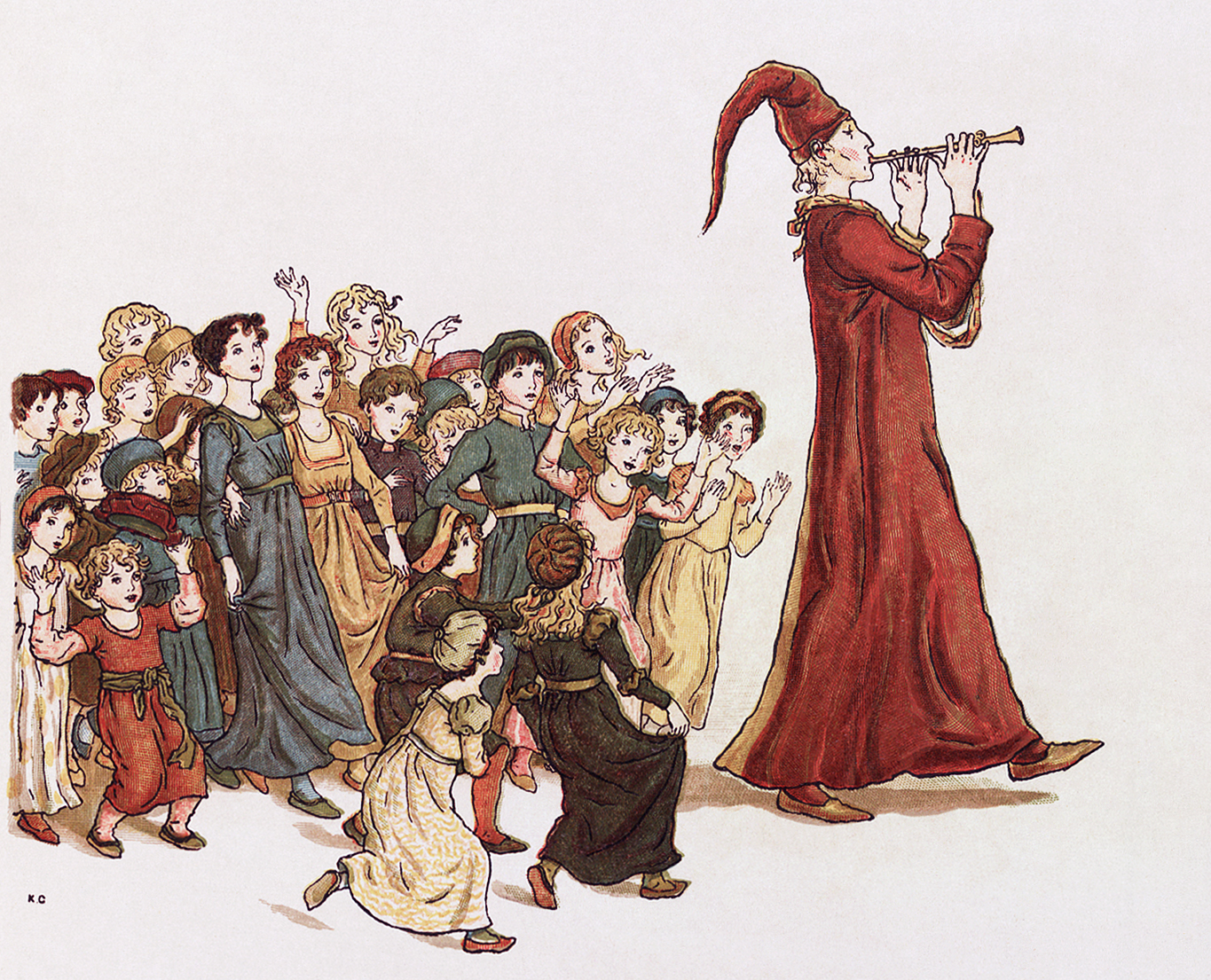
Old Man Pedro and The Pied Piper of Hamelin

pied-piper-mom

The Pied Piper of Hamelin, everybody should know of the story, right? A piper in pied (Multi-Colored patches) clothing shows up to the German town of Hamelin. The problem with Hamelin is that it is dealing with a swarm of rats. The Piper talks to the Mayor, he explains “I can take the rats away, to The River Weser, they will drown and your plague will be gone. I just need 1000 guilders.” “For the love of God they are eating our children! I will pay you anything!” replied the mayor. So the Piper played a little jig and drowned the rats and returned to the Mayor who was all like “Yeah, you did it. But the best I can do is 50 guilders.” So the piper was all like “How much do you like your towns children?” and the children were all like “Play another jig Mister Piper!” and he was all like “Yes.”

I believe correlations can be made between the story of the Pied Piper and of the first Pedro Segundo (hereby referred to as Old Man Pedro). When Tres Marinas was dealing with a plague of ants and men of science were of no help, Tres Marinas’ only man of magic was their savior. It was so bad they described it as a plague of ants. Do you know how bad something has to be to be a plague? THIS BAD! Old Man Pedro wanders up to some ants, takes one of his boss’s handkerchiefs and just grabs a handful of them. He leads the ants to the highway so they can go on and bug(HA! Wordplay) some other town and he does it without following the whole second arc of the Piper. This Injects some of that Magical Realism into the plot, which, up into this point we had only had a couple examples of magic in this universe (almost if not all of them Clara).


Categories Uncategorized

Esteban’s Character

Esteban’s behavior and characteristics change multiple times throughout the beginning of the novel. In the beginning he is presented as Rosa’s hardworking fiancé, working in the mines so that he will have money to marry her. After her death, he returns grief-stricken and the reader begins to see the true nature of his character.  Although he appeared to be and claimed to be devoted to Rosa, at her grave he said, “I didn’t tell her that I hadn’t seen any other women all that time except for a handful of shriveled old prostitutes.” (pg 40) This is the first sign of his true nature. It is revealing that he disregards the prostitutes as unimportant and considers himself still faithful to Rosa.

After Rosa’s funeral Esteban leaves to work on the hacienda. On the train ride there, his character changes when he resolves to never be poor again. On the hacienda Esteban becomes an authority figure to be feared. He governs the people with complete control, has violent episodes, and rapes women all over the countryside without consequence. He stops shaving, bathing, and reading regularly, leaving behind his good habits from before. He works with the conservative party to maintain his power and superiority over his tenants. He views those around him as second class citizens that should appreciate everything that he has done for them. All of these actions show the true nature of Esteban’s character.

When Esteban returns to town for his mother’s funeral and his marriage to Clara, he acts as if he is a changed man. He is respectful of Clara’s wishes and does not lose his temper as often. No one in the city knows of his crimes and cruelty of the past, and he acts as if they never happened. Contrary to everything he seemed to believe before, he seeks a wife who is stronger than the women on the hacienda and from a respectable family. This comes not from respect for such values, but from his pride. His pride caused him to believe he was superior to all those around him, and that he could have any of the hacienda women as his wife. Because of his pride he believed he must find a wife matching his status.

Contrary to form, Esteban has a love and obsession for Clara, but the more she rejects him the more he lashes out. Over time he begins to return to his past habits. As his satisfaction with his marriage lessens, he falls back to visiting prostitutes in the city and often returns to the country. After Clara and Esteban argue over the names of their children he goes and visits a whorehouse, defending his decision by saying, “I was annoyed with Clara, I was in a bad mood, I had excess energy, I was tempted.” (pg 128) Esteban is able to refrain himself for a short period of time, and maintain his life in town without showing how he truly is. However, as the story continues, it is likely that he will continue to revert back more to his ways in the country.  The true character of Esteban is the one of the country. He is temperamental and views all of the other people around him as weaker, inferior humans, and cannot continue hiding how he truly is while in town.

housespirits


Categories Uncategorized

I really am sorry for how long (and possibly boring) this post is

images for ci


Isabel Allende’s novel features a variety of themes ranging from political to economical. One of the strongest recurring themes, though, in “The House of the Spirits”, is a social one. Allende’s novel is set in a time where female oppression was a normal way of life. Throughout the novel we see the varying levels of subjection the female characters have to deal with, something that is best exemplified by Esteban’s various speeches on the subject of equality: “It would be lovely if we were all created equal, but the fact is that we are not.” (72-73) This line here in particular conveys the mindset people in the novel have when it comes to equal rights for men and women. There wasn’t some dark ulterior motive when it came to refusing women their rights; it was just the way things used to be. As Esteban had put it, it was simply a “fact”. Wrong as it was, women were considered inferior just because they weren’t men, even though in the novel, we can see how capable they are, as demonstrated through such female characters as Nana. Women were supposed to sit back and keep silent, like Nivea had to do with Severo, for instance. Even though she was as equally ambitious as her husband, Nivea had to put his political agenda before hers, just because she was a woman.


There is a brief passage in the novel where the narrator talks about the new house Esteban is building for himself and Clara. The narrator talks about how, “He [Esteban] could hardly guess that that solemn, cubic, dense, pompous house,…..,would end up full of protuberances and incrustations,……,of turrets, of small windows that could not be opened,…….,all of which were Clara’s inspiration….” (104-105).  When Esteban sees the outside of his future house, he already has a preconceived notion as to what it will look like on the inside; however, as the narrator tells us, Esteban could hardly even begin to imagine what the interior will be. He’s in for a surprise, though, because Clara has transformed the house into something completely different from what it appears to be from the outside. There is far more to the house than Esteban, or anybody else looking at it, could begin to think.


This passage here is a really powerful metaphor, especially in context with the message Allende is trying to send her readers. In relation to the idea that people used to have a lot of misconceptions about women, we can see the house as a metaphor for women in general, while Esteban here represents the rest of the world’s narrow sighted view of women. Two key words here are “pompous” and “cubic”; on the outside, we are told that the house looks exactly the way Esteban wants it to look. “Pompous” gives us the idea of arrogance and exaggerated airs; it connotes the idea of superiority, something that Esteban is bursting with, particularly when it comes to how he treats women. Then there is the word “cubic”, which gives us the impression of exactness, of a mathematical measurement. The word leaves no room for growth, for exploration- it even almost has the impression of confinement. Esteban has a very particular way that he wants the house to look, and this is a reflection of how society once treated women. It didn’t matter that women were just as capable as men; what mattered was the fact that they weren’t born men, and therefore, were considered inferior. The rights and opportunities that women wanted- for instance, like Ferula’s desire to be as free from filial duty as her brother- were inconsequential, because it freed women from conforming to the role that was already set out for them.


The inside of the house, however, is something very different from what Esteban sees on the outside. On the inside, we’re able to see that Clara has expanded the house beyond anything that Esteban, with his limited perspective, could possibly imagine. Clara has turned the house into something of her own creation: from the imposing, flamboyant monument that Esteban sees from the outside, Clara has made it something completely different. It is full of unexpected turns and imperfections: “of small windows that could not be opened…” (105). The interior demonstrates the idea that there was far more to women then people used to think and it also illustrates the capabilities that women weren’t given credit for- their abilities and ambitions that were just as powerful as that of a man’s.


This quote demonstrates an underlying theme in this novel: Allende’s desire for the world to see that there is more to people, and not just women, then the way we choose to see them. Allende talks about seeing people for who they really are, not for what we want them to be.


Categories Uncategorized

Clara the Adult

I have to admit I found the fifth chapter of The House of the Spirits a little less interesting than previous chapters. This chapter is titled The Lovers, which is spot on because it is basically all about how Blanca and Pedro Tercero are sneaking out at night to “insatiably [enter] each other’s skins” (Allende 157). We get it, they love each other. *rolls eyes*

Besides their many night time adventures, this chapter sets up a lot for what is to occur later in the novel. The most obvious is the volcanic eruption that Clara predicted would be devastating, but no one took her seriously (158). This leads to the total destruction of the Trés Marías, the death of Nana, and the immobility of Esteban Trueba (karma’s a bitch, bro). Most importantly, we finally see some significant character development with Clara. Up until now, Clara has neglected her “duties” as a wife and has not even thought about domestic chores. Instead, she fills her time talking to spirits and meeting other people with similar abilities. Because of Esteban can only shout his demands from his little hut and express his anger by banging his cane around, Clara is forced to be grounded in the present and take on some  of that “earthly power” that we talked about in class. She had to, “for the first time in her life,”  take charge without the help of others (because they are all dead or immobile), which I think she should have done, idunno, maybe when she had her first child (164).

Clara waking up to her responsibilities:

The change in her character was not only evident to the reader, but also to other characters in the novel, such as Blanca who saw how she changed from a “lighthearted, absent-minded angel” into an “efficient woman with callused hands” (167). Her learning about responsibility is great for a mom (better late than never), but I think we should hope that she stays in touch with her spiritual abilities. After all, her ability has been a vital part of her character and an important tool for the progression of the novel, thus far. Her prophesies have predicted the deaths of Rosa and her parents, every earthquake, the names and numbers of her children, and the death of Férula. Furthermore, as Professor Duffey has mentioned before, the characters’ names in this novel are symbolic. Clara, as my group has discussed, is similar to clairvoyant, so having Clara lose touch with her abilities really wouldn’t make much sense, would it?


Women Werkkkk

Historically, men reigned superior to women in various facets of life. From the home to the work place, women find themselves fighting a constant battle for equality. The fight has become a focus and priority in today’s society, but prior to the 21st century/recent generation of millennials, this has not always been the case. The novel, The House of Spirits, illustrates the struggle pre-21st century for gender equality through the lives of multiple hispanic women. Throughout the novel, they each exercise their own individual, personal strife towards a common goal. The feminist activism begins with Nivea who specifically advocated “to be allowed to vote and attend the university” (Allende 47). This provides insight into the wide span of avenues in which inequality exists-  not only in politics but in education as well.  Following suit, Clara contributes to the cause as she blossoms under the summer sun while living in Tres Marias, “[understanding] that there is a place for her” (Allende 117). She flourishes as she devotes her time and energy to educating the other residents of Tres Marias on various subjects- reading, writing, general healthcare. This newly discovered passion for investing her time into earthly phenomena rather than the “supernatural”, (Allende 117), empowers her- driving her to express her dissatisfaction with the status quo amongst the other women of Tres Marias. Additionally, to end chapter four, Allende references an anecdote about a group of hens who unite and retaliate against an abusive fox. Not only does this anecdote foreshadow the eventual downfall of the oligarchy system in Latin America and rise of economic equality, it more importantly aims to foreshadow a revolution of the genders. Hens, believed to be born “stupid and weak”, (Allende  157) unify to exert influence and gain earthly power. All in all, this novel serves as the author Allende’s declaration of independence as well as a declaration of independence for a suppressed female population.

hens


Categories Uncategorized
css.php